
Using Food to Reduce Pain in Endometriosis
By Dr. Lisa Doran B.Sc., N.D., R.Ac
Endometriosis is a complex condition relating to menstruation occurring in women from their teenage years until menopause. Women who are diagnosed with endometriosis may experience issues with fertility, heavy period flow and often pain. Painful periods, painful intercourse, painful bowel movements and often chronic pelvic pain. Pain will vary from mild to moderate to extreme depending on the severity of the endometriosis, the location of the endometriosis in the pelvis and the formation of adhesions between pelvic organs. And yes…..using food as medicine can help.
Women are told that this pain is normal or that they are over reporting the severity of the pain. Often they are told to ignore the pain and get on with their normal daily activities. This message is confusing to women – especially younger women – because the pain of endometriosis can be absolutely debilitating for some women. Discounting their experience and struggle can feel like their concerns are not acknowledged or addressed.
Most women are told that there is no cure for Endometriosis and they are left without tools to deal with their monthly experience. It is a difficult road.
As our understanding of Endometriosis expands through research and clinical success we have found that changing the way a woman eats to a diet that emphasizes decreasing the inflammatory factors in the body to be helpful. We know that inflammation causes pain. We know that women who suffer from Endometriosis have higher levels of inflammatory factors when we test their blood.
Pain Busting Diet
Here are three suggestions for you to try if you suffer from endometriosis. My suggestion is that you commit to a full three cycle trial to see if you can reduce your pain and discomfort and improve your state of health and wellness simply by changing how you eat. It’s free, it’s easy and why not try this first?
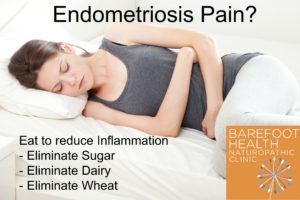
- Eliminate Sugar. Sugar is one of the most inflammatory substances that we consume. It drives the chemical pathways in your body that cause inflammation. All forms of processed white sugar or cane sugar need to be eliminated. You may have small amounts of 100% honey or 100% maple syrup. Avoid any food that has sugar added. Read your labels! Especially any processed or packaged foods that you eat – they are often full of sugar. Do not replace sugar with chemical sugar alternatives such as aspartame.
- Eliminate Wheat. Many people have an inflammatory or an immune reaction to wheat and we have found clinical success in women who completely eliminate wheat from their diets. These women report lower pain score and improvements in other Endometriosis symptoms. Eliminate all bread and pasta made of wheat flour, all baked goods made of wheat flour, all gravies and sauces that may have wheat added. Read your labels to be sure that wheat or wheat by-products have not been added to processed foods. Other grains such as oats, barley, rice, quinoa do not need to be eliminated.
- Eliminate Dairy. Dairy affects the inflammatory process in a number of ways. The type of fat found in dairy can be involved in the inflammatory process, the protein (casein) and sugar (lactose) found in dairy can be a common allergen and therefore provoke an inflammatory immune response in the gut increasing the number of inflammatory products circulating in the blood. Finally, the way that dairy is processed for consumption using high heat produces end products that are difficult for the body to process and eliminate. Eliminate all milk from animals, eliminate butter, cheese, yogurt and read your package ingredients for any milk products. Plant based milks such as coconut milk, almond milk and soy milk are good replacements – just be sure that they have no added sugars in them.
So what can you eat? For many people dairy, wheat and sugar are staples in their diets and the elimination of them leaves them wondering what to eat. The focus needs to be on whole, live, fresh foods. A plant based diet including lots of vegetables and fruit, healthy lean meat, fish, beans and legumes, nuts and seeds and eggs is the ideal balanced diet.
Be Well!
Your experience is important to me! Please try these suggestions and tell us how you do and how your symptoms improve.
Learn more about how Dr Doran’s journey with Endometriosis lead to her career in Naturopathic Medicine
Durham Endometriosis Network – Monthly Support Meeting Schedule
 Dr. Lisa Doran N.D, is a Naturopathic Doctor who has been practising in Durham Region since 1997. Dr. Lisa Doran is a general family practitioner and she welcomes new patients of all ages and stages of their lives to explore what Naturopathic Medicine can do for their health and wellness.
 Dr. Eileen Fast N.D, is a Board-certified Doctor of Naturopathic Medicine practicing in Ontario. Her special interests include, but are not limited to women’s health, hormone disorders, fertility, prenatal & postpartum support, as well as pediatric care. Eileen is also an International Board Certified Lactation Consultant (IBCLC) and is currently an Executive Director and faculty at the International Breastfeeding Centre in Toronto. Eileen has also received CAPPA-approved labour doula training.
  Adrianne Colby is a Registered Massage Therapist with experience and training in Swedish Massage and advanced techniques that promote relaxation, decrease pain, increase range of motion and treat a variety of conditions. She has truly found her passion through massage therapy and is dedicated to supporting clients in reaching their health and wellness goals.